
The Psychology of Control
Kay ScarpettaThis flow examines how characters seek safety by controlling bodies, information, spaces, and narratives.
increasing Bearing strength in each event
 decreasing
Bearing strength in each eventdecreasingOrder Against Fear

Order Against Fear
Terri’s environment
Terri’s apartment is meticulously arranged, from the table settings to the refrigerator and clothing. Her order appears to defend against contamination, uncertainty, and dependence.
Control as vulnerability
The same habits that make the apartment legible also make Terri predictable. A person who knows her routines can turn her precision into a trap.
The cost of certainty
Terri’s need to control every detail cannot control other people. The apartment remains perfect while her life is invaded and destroyed.
Oscar’s Defensive World
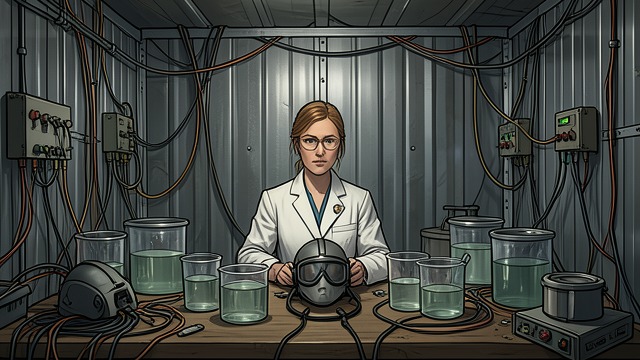
Oscar’s Defensive World
Protective devices
Oscar surrounds himself with meters, antennas, foil, water, helmets, and shields. His apartment is a physical model of a mind trying to block invisible intrusion.
Rational fragments
Some fears are delusional, but others correspond to real surveillance and implantation. The defensive objects therefore appear absurd and tragically appropriate at the same time.
Safety without trust
Oscar cannot feel safe because every protection suggests a new threat. His fortress becomes proof that he is under siege.
Morales’s Total Control
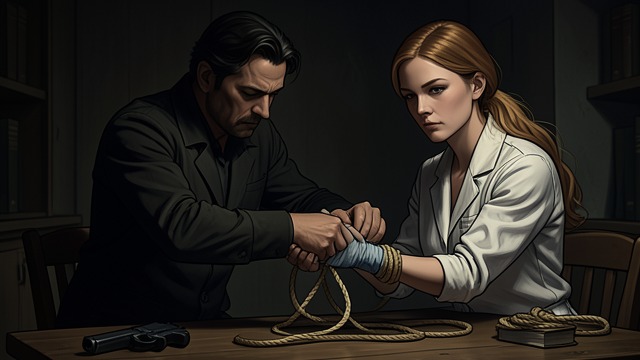
Morales’s Total Control
Bodies arranged
Morales binds women, directs their movements, controls the telephone, and uses a pistol to regulate speech. His authority depends on making others physically unable to choose.
Evidence arranged
He plants fingerprints, shoes, restraints, and digital traces. Control extends from bodies to future interpretations of the crime.
Collapse of mastery
His confidence fails when Lucy survives and Marino refuses to surrender morally. The controller is defeated by people whose actions he cannot fully predict.
During the examination of Terri’s apartment
During the search of Oscar’s apartment
During the penthouse hostage crisis
